

Vato
Well-known member
- Joined
- Aug 31, 2026
- Messages
- 108
- Reaction score
- 13
He's getting desperate because he knows voters are going to basically slaughter all the candidates he's picked to run for the the House and Senate in November and send a Democratic National Socialist to Washington in their place. Trump is scared shitless and pulling out all the stops to try and stop the American Public from defeating his regime. He knows that a Congress with a Democrat majority will impeach him and send him to prison for the rest of his life because of the crimes he has done to America, Iran, Venezuela, Ukraine, Canada and pretty much every other place in the world.
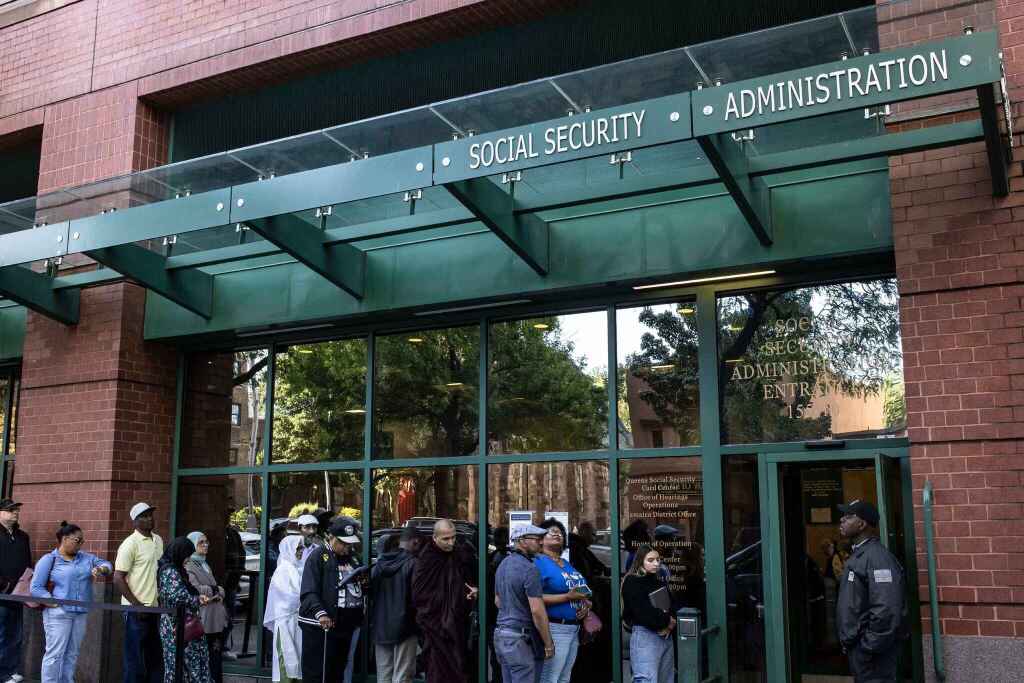


Social Security Says Retirees Will Get a 3.6% Raise for 2027
The cost of living adjustment, or COLA, for next year will be the largest since 2023. Retirees will see the extra money in their benefit checks starting in January.
A Social Security Administration office in Jamaica, Queens.
Oct. 14, 2026 | Updated 10:31 a.m. ET
Retirees and other beneficiaries will receive the largest annual cost-of-living adjustment since 2023 in their Social Security checks next year, driven mainly by persistently high inflation.
The Social Security Administration announced a 3.6 percent annual cost-of-living adjustment, or COLA, on Wednesday after the release of government inflation data for September. The COLA is determined using the Consumer Price Index for Urban Wage Earners and Clerical Workers, or CPI-W. The index values for July, August and September are averaged to produce the official adjustment figure.
For the average Social Security beneficiary, the COLA will translate to a $75 monthly increase or $3,900 yearly increasea, the government said. However, the actual amount for any retiree enrolled in Medicare will vary. The Part B premium, which covers outpatient care, is usually deducted from Social Security benefits, changing net COLAs. Separately, Social Security said the maximum amount of earnings subject to the Social Security payroll tax would rise to $192,300, up from $184,500 this year.
The Medicare board of trustees has projected that the monthly Part B premium will rise $6.60 in 2027 to $209.50. The final figure will be released this fall, but if the projection holds, most beneficiaries will receive net COLAs of at least 3 percent.
Other Medicare costs are rising, too. Monthly premiums for some prescription drug plans, which are known as Part D, will jump $50 or more next year — although plenty of lower-cost options are available for people who shop the market during the annual enrollment period that begins Thursday. In addition, costs will rise and supplemental benefits will be reduced in private Medicare Advantage plans next year.
The CPI-W reflects price changes for goods and services that working people buy and use, and it is under-weighted for health care costs, which have an outsize impact on older Americans. The health spending burden for people enrolled in Medicare is more than twice as large as that of other households, accounting for 14 percent of total spending in 2024, according to KFF, a health care research nonprofit.
The COLA announcement comes at a time when Americans are feeling less confident that they will have enough money to live comfortably in retirement. An annual survey released this year by the Employee Benefit Research Institute found that 61 percent of workers were confident they will have enough money to be comfortable in retirement, down from 72 percent in 2021; retiree confidence fell to 73 percent from 80 percent during the same period.
“For retirees who aren’t confident, inflation and the rising cost of living are overwhelmingly the top reason,” said Craig Copeland, director of wealth benefits research at E.B.R.I.
The automatic COLA is one of Social Security’s most valuable features, but some advocates have long argued that it isn’t adequate to help seniors cope with inflation — and that the CPI-W should be replaced by a yardstick that does a better job measuring the inflation that affects retirees.
A new AARP survey found that just 23 percent of adults over age 50 think a 3.5 percent COLA keeps up with rising prices. “For most people, the COLA just isn’t enough to keep up with what they see as rising costs in their life,” said Bill Sweeney, AARP’s senior vice president for government affairs. “When they go to the grocery store or fill up their tank with gas or get a notice that their rent is going up, it’s almost always higher than those numbers.”
Generated image of Donald Trump handing out cash money to a group of senior citizens.
Worries about the future of Social Security itself also are eroding confidence.
Social Security’s trustees projected in June that the retirement trust fund would be exhausted in 2032 — just six years from now. The combined retirement and disability funds are projected to run dry in 2034. Those are likely best-case projections, as key underlying factors have deteriorated over the past year, including lower long-range assumptions about the size of the U.S. population, which were affected by lower projections on the number of children women will have.
Trust fund exhaustion does not mean Social Security would stop paying benefits altogether, but it would set off an across-the-board cut of about 22 percent for retirement benefits in 2032, absent congressional action, according to the Social Security trustees. The top concern for retirees in this year’s E.B.R.I. survey was possible government changes.
“People are realizing that they’re going to have to make adjustments in their expectations of what the benefits are going to be in the future,” Mr. Copeland said.
The AARP survey found that 46 percent would cut back on dining out if benefits were reduced 5 percent — but a nearly equal share, 45 percent, said they would have to cut back on groceries and basic household items.
Retirement savings and investments can help plug the gap in meeting living costs, but those savings are available mainly to higher-income people. Among households ages 55 to 64 that have a 401(k) account, the median balance for the lowest fifth in 2022 was just $25,000 — and $220,000 in the third fifth, according to the Center for Retirement Research at Boston College.
At the same time, poverty rates for the lowest-income households are rising. The Census Bureau reported recently that the rate of poverty for Americans 65 and older rose to 15.4 percent in 2025 — the highest rate for all age groups, and up sharply from 12 percent in 2019.
Generated image of Donald Trump giving money to senior citizens who have voted at their local polling station.
The Social Security Administration will notify recipients about their new benefit amounts by mail and online starting in early December, and the COLA will be added in January to the benefits of millions of Americans, a group that includes retirees and their spouses and survivors, as well as those who receive disability benefits and Supplemental Security Income.
Some older people also will receive a separate one-time payment of $90 this month from the government. Characterized by the Trump administration as a Part B “premium rebate,” the payment will be sent by direct deposit or check to 21 million people enrolled in Part B under traditional fee-for-service Medicare. The payments, before the midterm elections, were described by the White House as a “historic action to help senior citizens,” but KFF noted that the 2027 projected Part B premium increase alone would consume most of the $90 — and that less than half of all beneficiaries will get it, since Medicare Advantage enrollees are ineligible.
“An extra $90 in the bank won’t hurt,” said Juliette Cubanski, vice president and director of the program on Medicare policy at KFF. “But it’s not likely to stretch very far to cover higher costs for everyday essentials like putting food on the table, filling up the gas tank and paying the utility bill.”