

Vato
Well-known member
- Joined
- Aug 31, 2026
- Messages
- 131
- Reaction score
- 18
Digital clocks and especially those that are radio-controlled atomic clocks are old and busted. It's time to start using the trusted and true 400-year old pendulum design. Fun fact: Atomic clocks were invented just a few decades ago and therefore haven't been around long enough to stand the test of time.
This video will educate you on why mechanical clocks are inherently better:
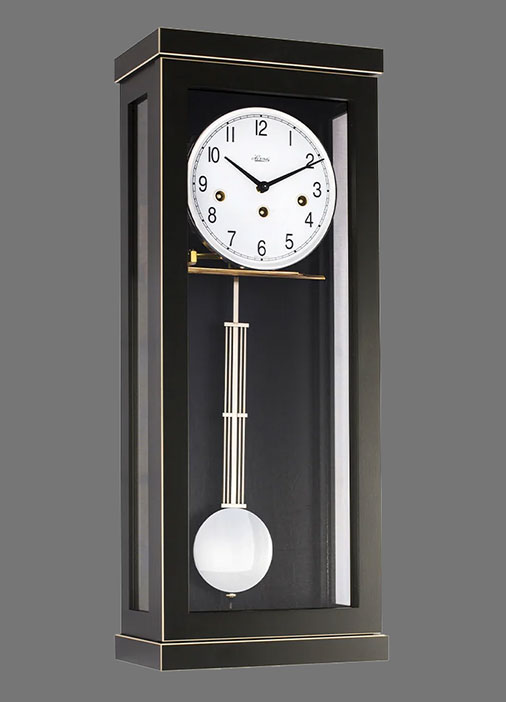
This Hermle wall-mounted pendulum clock looks nice and is only ~$1,000. I think I'll buy one when an an unknown rich uncle passes away and leaves me his entire fortune.
This video will educate you on why mechanical clocks are inherently better:
21m04s
TL;DW: Tom Scott visits the Cumbria Clock Company to explain the restoration and principals of historical mechanical pendulum clocks.
- A heavy pendulum dictates the clock's timing, using temperature-compensated dual metals to maintain a constant length [04:14].
- Suspended weights supply energy to the gear train, which reduces down to drive the clock hands and bell mechanisms [05:43].
- The escapement releases one gear tooth per swing, giving the pendulum a micro-impulse to counteract friction [05:49].
- Count wheels use varying perimeter lengths to keep levers raised and strike the correct hourly bell counts [06:58].
- Mercury-filled pendulums expand dynamically to neutralize temperature changes in precision regulator clocks [15:29].
- Pinwheel escapements slide pins down angled pallet slopes to deliver smooth, subtle energy pushes [17:01].
This Hermle wall-mounted pendulum clock looks nice and is only ~$1,000. I think I'll buy one when an an unknown rich uncle passes away and leaves me his entire fortune.