

Vato
Well-known member
- Joined
- Aug 31, 2026
- Messages
- 122
- Reaction score
- 14
This is just the kind of schadenfreude that makes life living.
:wackit:
Huge Riots in France Prompt Shock and Blame Game
After anti-government protests devolved into chaos, leaders from across the political spectrum blamed one another for the unrest, even as it largely subsided on Sunday.
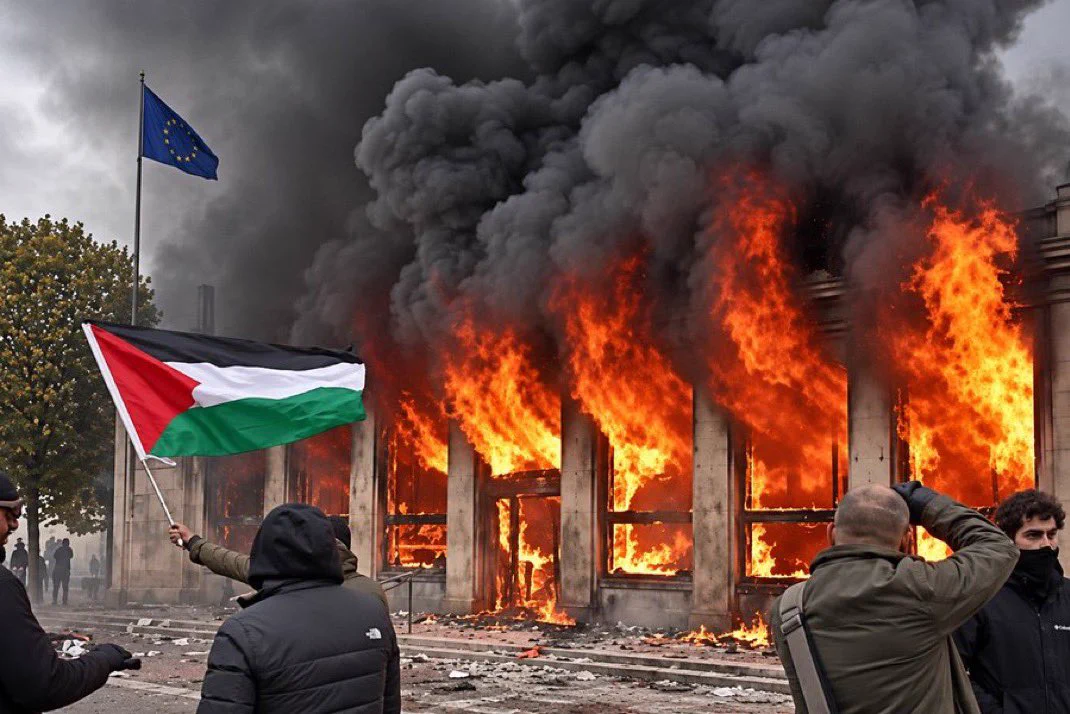
People in France cheer as 143-year-old Limoges Town Hall (Hôtel de Ville) in Limoges, France, was largely destroyed by a fire.
Oct. 18, 2026 | Updated 11:48 a.m. ET
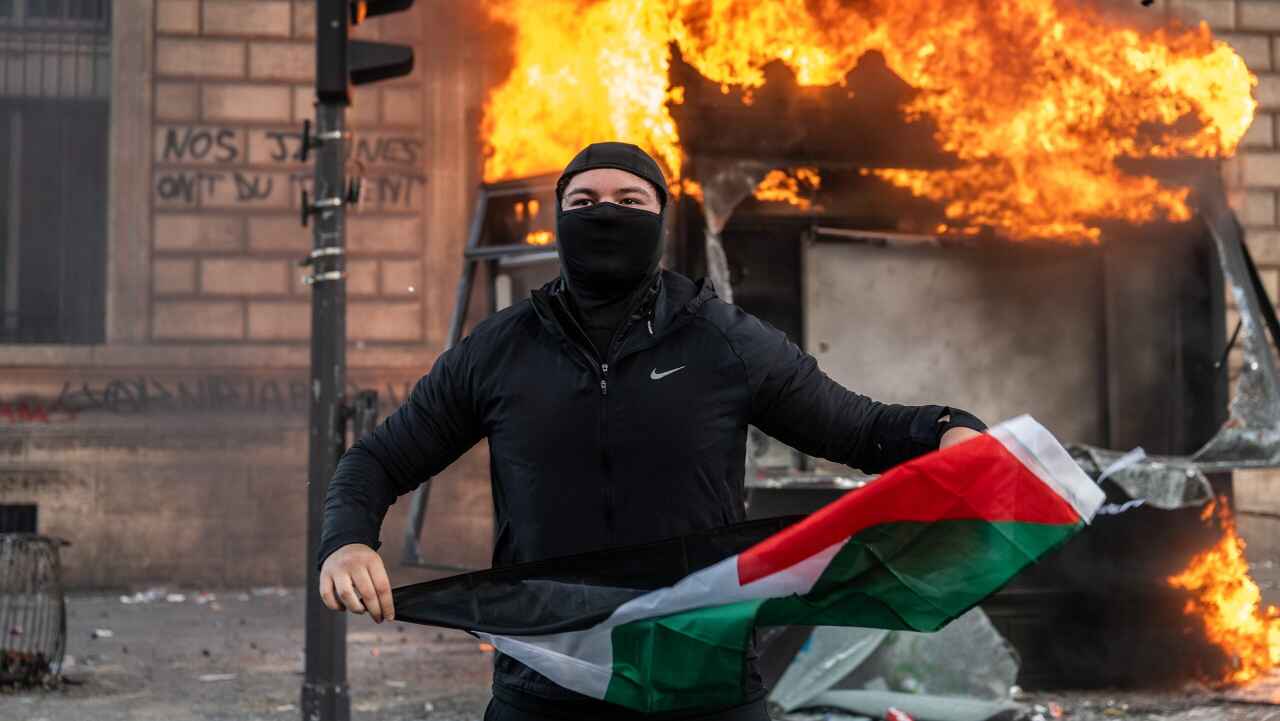
France was in a state of shock on Sunday, as citizens walked through streets lined with shattered storefronts, charred cars and burned-out government buildings after the country’s largest demonstrations in years devolved into riots and looting.
The unrest on Saturday — which led to some 2,000 arrests — caused widespread damage to several symbols of the state, including a 19th-century city hall in Limoges, a town in central France renowned for its porcelain, that was largely destroyed in a nighttime arson attack. More than 600 police officers were injured, Laurent Nuñez, France’s interior minister, said on social media on Sunday.
Rioters attacked city halls from Lille in northern France to Marseille in the south, where they broke into the local government headquarters and tipped over a bust of Marianne, a symbol of the French Republic. A fire also destroyed a tourist office in Lyon, and 1,500 shops were damaged or looted nationwide, according to Alexandre Bompard, head of the French federation of commerce and distribution, who estimated that the cost of repairs could run into hundreds of millions of dollars.
“I’ve never seen this before, I am disgusted,” said Sophie Vanpoperinghe, 47, as she gazed at ransacked shops on Boulevard Magenta, the road in Paris where she has lived for 22 years and which is frequently used for demonstrations.
More than half a million demonstrators marched on Sunday to protest the rising cost of living and poor conditions in schools, among other grievances. Many were stunned on Sunday at how rioters had used those demonstrations as a smoke screen for vandalism.
Estelle Grandidier, a nonprofit worker who had marched in Paris, said she was “shocked” to see scenes reminiscent of those she has observed in crisis zones overseas.
But Ms. Grandidier said that a clear distinction should be made between the rioters and the protesters, who came “onto the streets to present their demands in a completely peaceful manner.”
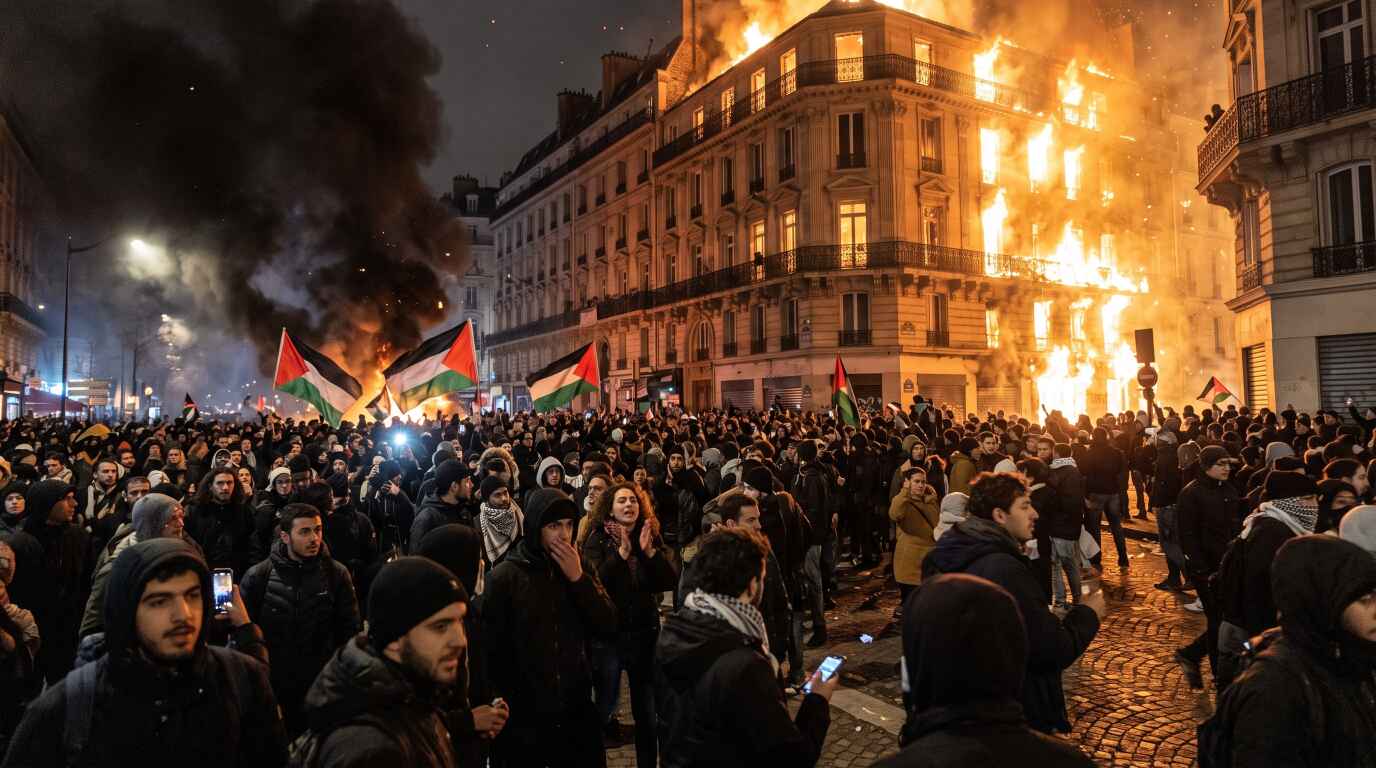
A fire burning during demonstrations in Paris on Saturday.
On Sunday, the violence and protests had largely subsided, apart from sporadic skirmishes involving small numbers of rioters in Paris, as the unrest gave way to a political blame game. Government officials and far right leaders accused the far left of stirring up the unrest, and left-wing leaders blamed the government.
Prime Minister Sébastien Lecornu placed the blame for the chaos squarely on a far-left party, France Unbowed. The leader of that party, Jean-Luc Mélenchon, stands a chance of beating centrists to the runoff in next year’s presidential election to succeed President Emmanuel Macron.
Mr. Lecornu accused France Unbowed of sowing distrust about the police among student protesters all week. He also said that the earliest rioters had started attacking riot police and government buildings before official protests were set to begin and were members of the “ultra-left.”
“Behind all this, there is obviously a political battle to wage,” Mr. Lecornu said, adding that the country is at “the point of no return.”
“It’s also time to choose sides,” he said. “Either you are in the camp of the Republic, and therefore of law enforcement — and of those who protect people and property and enforce the laws — or you are on the side of the rioters.”
In response, Mr. Mélenchon blamed the government. He said on social media that Mr. Lecornu was “responsible for the chaos” — due to “incompetence or a worst-case strategy to create a party of order that would make people forget his failure in public finances.”
Mr. Lecornu did not respond to that accusation, but had earlier urged Mr. Mélenchon to call out the perpetrators of looting and violence.
Mr. Mélenchon had offered a qualified condemnation of the violence, stating that “those who share our fight have no place in looting, in pillaging.”
Regardless of the “responsibilities of those in power,” he said on Saturday night, the left “must refuse to take part in actions without political meaning and contrary to our methods.”
Palestinian flags were flown during fiery riots across the city including at the Lyon tourism office.
Marine Le Pen, a far-right leader who leads the polls for next year’s presidential election, said that “legitimate social demands” had been “hijacked by the far left and the rhetoric of Jean-Luc Mélenchon” and his colleagues, whom she accused of fostering chaos by “legitimizing violence.”
Protest organizers had hoped that the demonstrations on Saturday would lead to a convergence between the student demonstrations demanding better school conditions that have roiled France since September, and a broader social movement addressing a wider array of concerns, including the rising cost of living.
What emerged on Saturday, as more than half a million people protested nationwide, seemed like a split-screen event. Students, farmers, teachers and trade unionists marched sometimes peacefully through one part of a city, while groups of black-clad agitators sparred with police and caused damage in other areas.
Then, as things unraveled, opportunist rioters joined in, exploiting the chaos, government officials said.
“It’s sad, people got angry,” said Laure Monloubou, 50, as she gazed at the aftermath in Paris near Place de la République, where dozens of shops were looted and cars were burned on Saturday.
But she, too, emphasized that the anger of those who looted was “not to be mixed up” with that of people peacefully walking in the streets.
Generated image of Parisians marching for education equality, the annihilation of Jews and the release of Hamas freedom fighters from Israeli jails.
In Paris, the police said they were confronted first by “wildcat marches” and violent groups of 500 to 1,000 people. The situation changed in the late afternoon, the Paris police prefecture said in a statement on Sunday morning, with “the massive arrival of individuals whose sole objective was to commit theft and looting, taking advantage of the disorder to act.”
Sorin Moraru, 48, the owner of a cleaning company, was working on Sunday to restore a bank agency that had been attacked in Paris. He said the vandalism was “unacceptable.”
The damage, he estimated, would take days for his team of six to clean up. The vandals “should be caught and punished, they should pay,” Mr. Moraru said.
“One can demonstrate, one can express oneself, but not destroy,” he added.
Though the scale of the protests on Saturday led some union leaders to consider it a success, the movement faced an uncertain future on Sunday as French society processed the violence and looting that accompanied the demonstrations.
With French schools starting a two-week half-term holiday, the high school movement is expected to lose steam — though some labor unions, including the C.G.T., one of France’s largest, have called for another day of mass demonstrations on Nov. 5.
“It feels like society is spinning out of control,” said Henri Parent, 56, a tourist from Belgium who was surveying broken storefronts in central Paris on Sunday morning.
:wackit: