
Vato
Well-known member
- Joined
- Aug 31, 2026
- Messages
- 169
- Reaction score
- 24
Direct Link: https://www.youtube.com/watch?v=R3OF6BKRh3A
Patrick Stewart, Master of Shakespeare, ‘Star Trek’ and More, Has Died
The British actor was 86. He achieved pop-culture stardom as Capt. Jean-Luc Picard on “Star Trek: The Next Generation.”
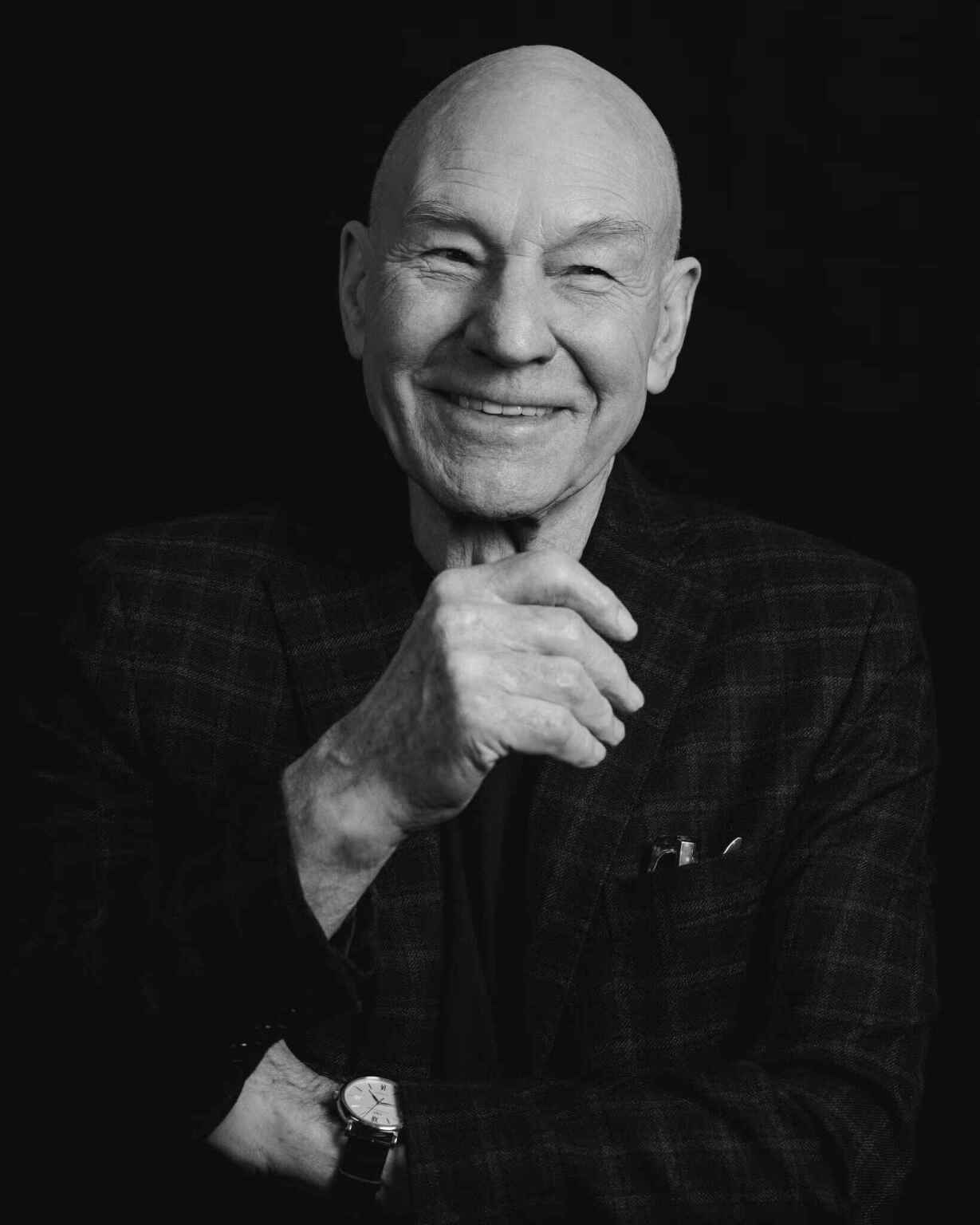
Patrick Stewart was Professor X in five “X-Men” movies, Macbeth on Broadway and, recently, the voice of a wise ram in “The Sheep Detectives.”
Oct. 29, 2026 | Updated 6:20 p.m. ET
Patrick Stewart, who overcame a bleak childhood in England’s coal-mining country to find acclaim as a Shakespearean actor before making an unlikely career pivot in middle age that would bring him his greatest fame, playing a noble starship captain on the TV series “Star Trek: The Next Generation,” died on Wednesday at his home in Los Angeles. He was 86.
The death, from Alzheimer’s disease and Lewy body dementia, was announced on social media.
With a commanding baritone voice — he had shed his Yorkshire dialect as an acting student — Mr. Stewart was by his late 40s an eloquent, statesmanlike presence on the British stage. But to many American television viewers, Mr. Stewart was a new face when he made his debut in 1987 as Capt. Jean-Luc Picard in “The Next Generation,” the first live-action spinoff of the original “Star Trek” series of the late 1960s.
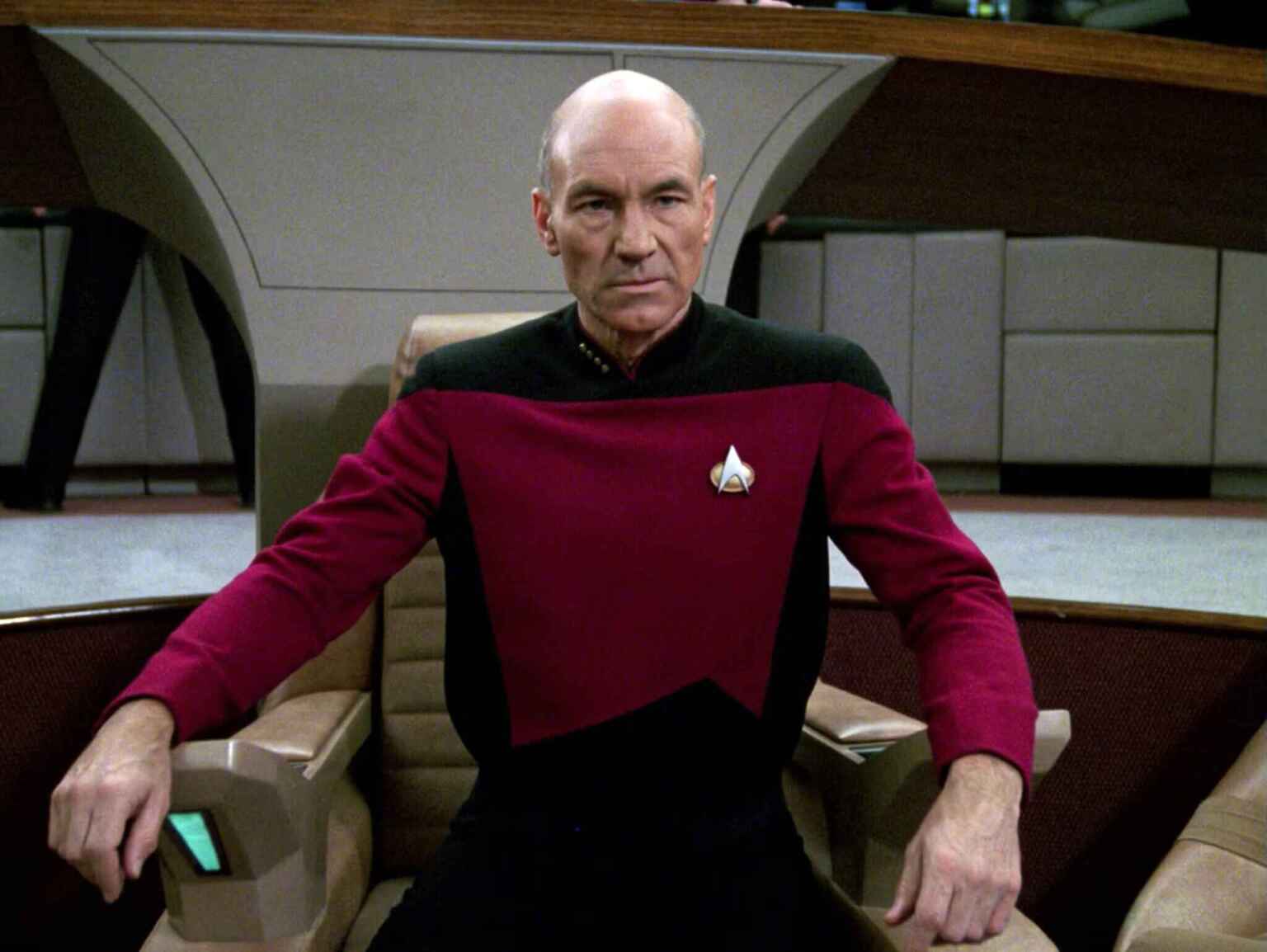
Picard was said to have been born in France, but Mr. Stewart played the part with a British accent.
Old and new fans embraced the balding, graying Picard and the members of his 24th-century crew, among them a pale-skinned android with deadpan comic timing; an intense, half-alien mind-reader; a gruff Klingon; and a blind human engineer wearing a vision visor. Over the show’s seven seasons, Picard became known for his preternatural calm and his trademark directives “Engage!” and “Make it so.” (Mr. Stewart titled a 2023 memoir “Making It So.”)
Mr. Stewart went on to star in four feature-film spinoffs — “Star Trek Generations” (1994), “Star Trek: First Contact” (1996), “Star Trek: Insurrection” (1998) and “Star Trek: Nemesis” (2002) — before returning to the bridge of the Starship Enterprise in 2020 in a TV sequel that he could call his own, “Star Trek: Picard,” which ran for three seasons.
The Enterprise was neither Mr. Stewart’s first science-fiction home nor his last. He appeared in David Lynch’s original film version of “Dune” (1984) as the weapons teacher Gurney Halleck. Years later, he was Charles Xavier, a.k.a. Professor X, in five “X-Men” movies, playing a wealthy telepath in a wheelchair who leads other mutants with superpowers. Those films, some of which also starred Mr. Stewart’s close friend Ian McKellen, included “X-Men” (2000), “X2: X-Men United” (2003) and “Logan” (2017).
By the time he became a screen star, Mr. Stewart was a lauded stage veteran in Britain, where he began working with the Royal Shakespeare Company in 1966. After making his first public stage appearance at 19, he performed in both classical and contemporary works alongside fellow up-and-coming actors like Ben Kingsley, Helen Mirren and Glenda Jackson.
In 1986, he won the London Fringe Theater best actor award for his role as the humiliated husband, George, in the Young Vic’s production of Edward Albee’s “Who’s Afraid of Virginia Woolf?” He also won Olivier Awards (Britain’s equivalent of Broadway’s Tony) for playing Enobarbus, Mark Antony’s best friend, in Shakespeare’s “Antony and Cleopatra” (1979) and Claudius, opposite David Tennant’s Danish prince, in “Hamlet” (2009).
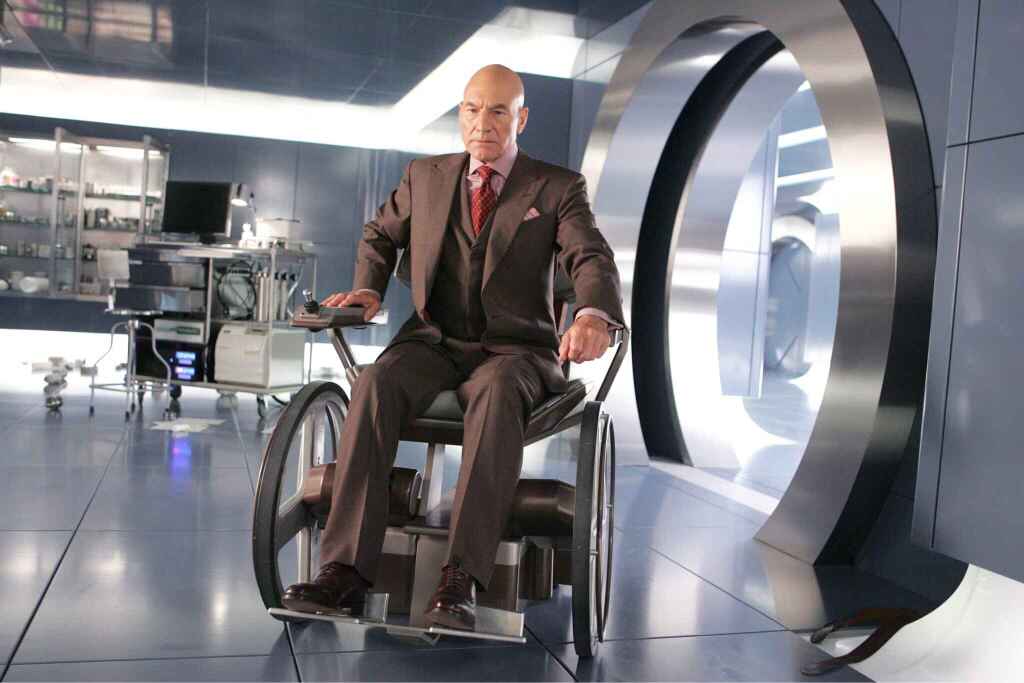
In the “X-Men” movies, Mr. Stewart played Charles Xavier, or Professor X, a powerful telepath and leader of the X-Men.
To most American film and television fans, however, he was always Picard, even after the “X-Men” movies. And though in terms of substance the character may have been light years removed from his meatier roles with the R.S.C., Mr. Stewart continued to express pride in his work as that resolute ship captain, dismissing theater-world peers who had looked askance at him when he went to Hollywood.
“They used to ask me ‘Why, why, why?’ as if I was somehow slumming it,” he said in a 2003 interview with the London newspaper The Independent.
“What snobbery!” he said, adding: “For huge numbers of people, I will always be Jean-Luc Picard, and that’s fine. I really believe we created an admirable individual.”
A Grim Upbringing
Mr. Stewart was born on July 13, 1940, in Mirfield, England, a small, industrial river town in West Yorkshire. (He was given no middle name but later invented one, Hewes, when he joined a union that already had a member named Patrick Stewart.) His father, Alfred Stewart, was a regimental sergeant major in the British Army, and his mother, Gladys (Barrowclough) Stewart, was a weaver at a textile factory. Patrick was the youngest of their three sons.
The family scraped by, living in a grim little house with no running hot water. The bathroom was outside, in a brick communal outhouse for the neighborhood, one stall to a family. Patrick used his family’s stall as a reading nook.
Much later in life, he wrote and spoke about the domestic violence that had shattered his childhood. His father was reduced to working as a semiskilled laborer after his military career, and became what Mr. Stewart described as a resentful “weekend alcoholic” who physically attacked his mother for years, sometimes in Patrick’s presence.
As Mr. Stewart recalled in a 2009 article he wrote for The Guardian, “I knew exactly when to insert a small body between the fist and her face, a skill no child should ever have to learn.”
The family dynamic was complicated. Despite the abuse, Patrick’s mother remained with her husband until her death in 1977, and throughout his life Patrick regarded his father with a mixture of anger, fear, sadness and regret. Interviewed by The Sydney Morning Herald in 2023, after his memoir was published, he told a reporter, tapping the cover of a copy, “I wish my father could have seen this.”
Patrick was 12 when an English teacher, Cecil Dormand, with whom he maintained a lifelong friendship, handed out scripts for “The Merchant of Venice” and instructed him to read the part of Shylock. Patrick went on to work with local drama groups.
Graduating from secondary school at 15, he took a job as a junior reporter with the local newspaper but quit after a year; his editor had complained that he was spending too much time on his theater avocation. After that, he worked for a year as a furniture salesman to save money for drama school, though a local arts council ended up giving him a full scholarship so that he could enroll in the prestigious Bristol Old Vic Theater School, which accepted him in 1957, when he was 17.
Two years later, he made his professional acting debut, as the marooned pirate Tom Morgan in “Treasure Island,” with the Lincoln Repertory Company in Lincoln, England. In other early appearances, he took the title roles in Shakespeare’s “Henry V” (1963), at the Manchester Library Theater, and Bertolt Brecht’s “The Life of Galileo” (1965), at the Bristol Old Vic.
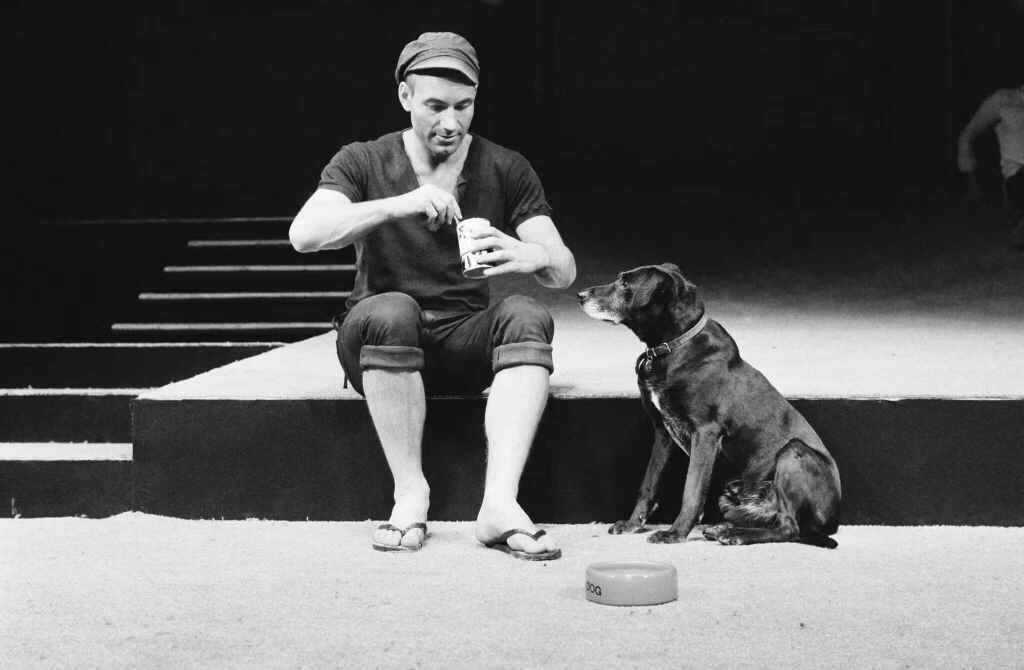
Mr. Stewart in 1970, during rehearsals for “The Two Gentlemen of Verona” with the Royal Shakespeare
As part of the R.S.C., Mr. Stewart played more than a dozen roles, mostly supporting, in Stratford-upon-Avon and London between 1966 and 1969. He was the Player King in “Hamlet,” Grumio in “The Taming of the Shrew,” Cornwall in “King Lear” and Hector in “Troilus and Cressida.”
A Working Actor
By the age of 19, Mr. Stewart was already balding, a result of hereditary alopecia. (He wore wigs for many screen and stage roles.) And he was already frequently hearing the prediction familiar to many young character actors: The first 20 years of your career will be difficult; true fame, if it ever comes, may take a while. It was a forecast that was largely borne out.
Mr. Stewart continued to find work, including on British television series like “Coronation Street” and “Story Parade.” By the 1970s, he was winning substantial roles in BBC TV movies and mini-series.
He portrayed Lenin in “Fall of Eagles” (1974); the postwar prime minister Clement Attlee in “The Gathering Storm” (1974); John Thornton, a brainy mill owner, in “North and South” (1975); Sejanus, head of the Praetorian Guard, in “I, Claudius” (1976, seen in the United States on “Masterpiece Theater” in 1977); and the Soviet spymaster Karla in brief, nonspeaking appearances in two John le Carré adaptations, “Tinker Tailor Soldier Spy” (1979) and “Smiley’s People” (1982).
Mr. Stewart made his Broadway debut in 1971 in Peter Brook’s acclaimed production of “A Midsummer Night’s Dream.” He was Snout, the tinker who portrays the wall between Pyramus and Thisbe in the comedy’s lowbrow play-within-a-play. It would be 20 years before Mr. Stewart appeared on Broadway again, in a 1991 run of a solo production of “A Christmas Carol” he had developed a few years before. The holiday-season show, which he repeated on Broadway in 1992, 1994 and 2001, received a Drama Desk Award for outstanding solo performance.
He was largely considered an unknown when the “Star Trek” offer came along. At the invitation of a friend, a university professor, Mr. Stewart had been in Los Angeles conducting master classes on Shakespeare when, one evening, he gave a lecture and performed some bits of the plays in a program that was open to the public.
A TV producer who was involved in developing a new “Star Trek” series happened to attend and soon persuaded Mr. Stewart to audition — even though, as Mr. Stewart later wrote, he knew “next to nothing” about the franchise.
Surprised to get the part — the “Star Trek” creator, Gene Roddenberry, who was overseeing the new series, had not been keen to hire him at first — Mr. Stewart expected the project to be a short-term commitment. How, he remembered thinking, could the show possibly succeed with a middle-aged pacifist captain with a French name and a British accent?
After its run ended, Mr. Stewart continued his stage and television career, now with the power of Hollywood fame behind him. Between 1995 and 2013, he starred in a handful of Broadway productions, two of them Shakespearean: He was Prospero in “The Tempest” in 1995 and, in 2008, the title character in “Macbeth,” for which he was nominated for a Tony.
He also played a self-satisfied bigamist in Arthur Miller’s “The Ride Down Mount Morgan” (2000); a desperate, possibly dangerous homeless man in Harold Pinter’s “The Caretaker” (2003); and a veteran actor who has seen it all in David Mamet’s “A Life in the Theater” (2010).
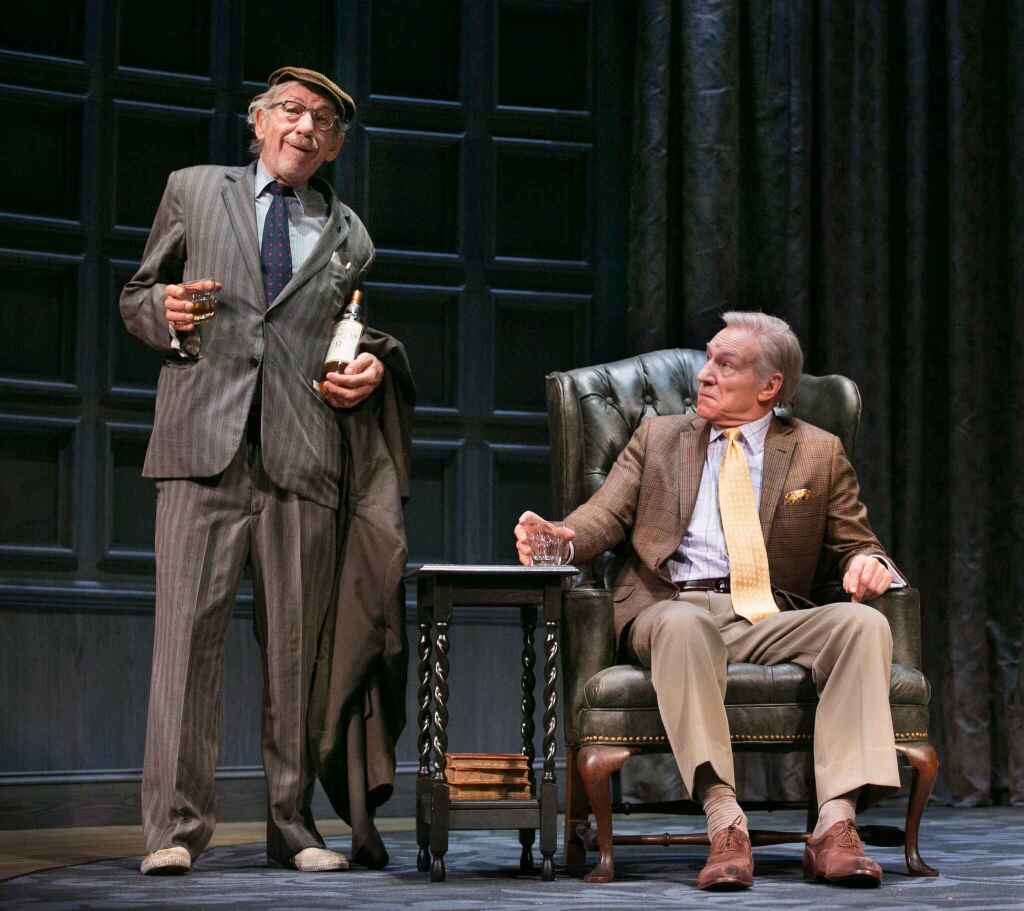
Ian McKellen, left, and Mr. Stewart in Harold Pinter’s “No Man’s Land” on Broadway in 2013.
In 2013, Mr. Stewart and Mr. McKellen co-starred in two plays in repertory, an offering that the New York Times critic Ben Brantley called “absurdly enjoyable.” Mr. Stewart was Vladimir, the cerebral one, in Samuel Beckett’s “Waiting for Godot” and the wealthy man of letters in Pinter’s “No Man’s Land.”
On American television, he portrayed a restless 17th-century spirit in “The Canterville Ghost” (1996); Captain Ahab in “Moby Dick” (1998); Scrooge in “A Christmas Carol” (1999), this time with a cast of 50 or so; a wealthy rancher pointedly named Lear in “King of Texas” (2002); and Henry II, opposite Glenn Close, in “The Lion in Winter” (2003).
‘Being Silly’
Though his rock-steady Picard only rarely seemed to lighten up, Mr. Stewart was, in fact, no stranger to comedy.
He “got rather good at being silly,” The Sydney Morning Herald wrote. He played King Richard in Mel Brooks’s 1993 film spoof “Robin Hood: Men in Tights,” parodying Sean Connery with a thick Scottish accent. He appeared in about 120 episodes of the animated series “American Dad!” as Avery Bullock, a C.I.A. deputy director with too many character flaws to count.
When asked to name the most distinguished moments of his career, Mr. Stewart often mentioned — not altogether facetiously — his appearances on “The Simpsons,” in 1995 and 2013, and “Sesame Street” (1996), on which he performed the soliloquy “B or Not a B.”
When he hosted “Saturday Night Live” in 1994, one of his sketch characters was an erotic-cake baker with a fetish even his customers couldn’t deal with. And the legion of projects for which he served as narrator included “Ted,” Seth MacFarlane’s 2012 movie comedy about a teddy bear with the soul of a frat boy.
After hundreds of screen and stage roles, Mr. Stewart — Sir Patrick since his 2010 knighthood — gave one of his final performances in “The Sheep Detectives” (2026), in which he was the voice of Sir Ritchfield, a wise old Boreray Blackface ram in a flock of crime solvers.
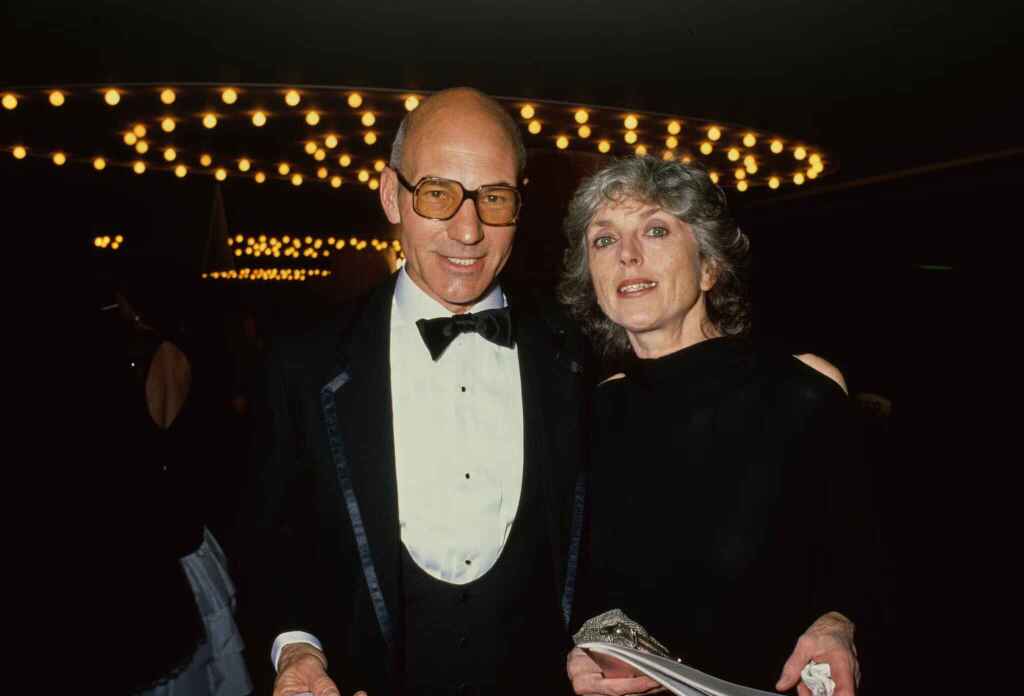
Mr. Stewart with his then-wife, Sheila Falconer, in 1988.
Mr. Stewart and Sheila Falconer, a choreographer, married in 1966, had two children, and divorced, almost a quarter-century later, in 1990. His marriage to Wendy Neuss, an American producer, also ended in divorce. The trigger in each divorce, he acknowledged in his memoir, was an affair with a younger woman. “In a life chockablock with joy and success,” he wrote, “my two failed marriages are my greatest regret.”
In 2013, he married Sunny Ozell, an American singer 38 years his junior, in a makeshift ceremony in a Mexican restaurant after a performance of “No Man’s Land” in Berkeley, Calif. His co-star Mr. McKellen, donning a cloak for the occasion, officiated, having been licensed by the Universal Life Church.
Mr. Stewart’s survivors include Ms. Ozell; his son, Daniel, who is also an actor; and his daughter, Sophie.
For Mr. Stewart, acting was a compulsion, he said, something he was driven to do. In 2011, a BBC interviewer asked him to describe the experience of being onstage. Mr. Stewart answered, “It feels like being a giant.”
And he saw no reason to quit, even in his later years.
“Acting was the thing that made me happy when I was 13 years old,” he wrote in his memoir, “and that is still the case 70 years later. I have so much more work to do. I am not done with the stage. I still want to try another TV comedy. I still have so many characters inside me that I need to let out.”