

Vato
Well-known member
- Joined
- Aug 31, 2026
- Messages
- 99
- Reaction score
- 11
Donald Trump and Israel's attack on the innocent people of Iran has led to the deadliest terrorist attack yet. This time in Saudi Arabia at an airport full of innocent civilians who aren't even Jewish and have nothing to do with Israel or Trump.
It now sounds like Trump is going to get even more involved and may now start directly bombing Yemen very intensely as retaliation for their attack on his Muslim friends in The Kingdom®.
At Least 12 Killed and 300 Injured in Houthi Attack on Saudi Airport
The strike on Saturday was the deadliest attack in a Gulf Arab country since the U.S.-Israeli war with Iran began in February, and forced the airport to temporarily suspend operations.
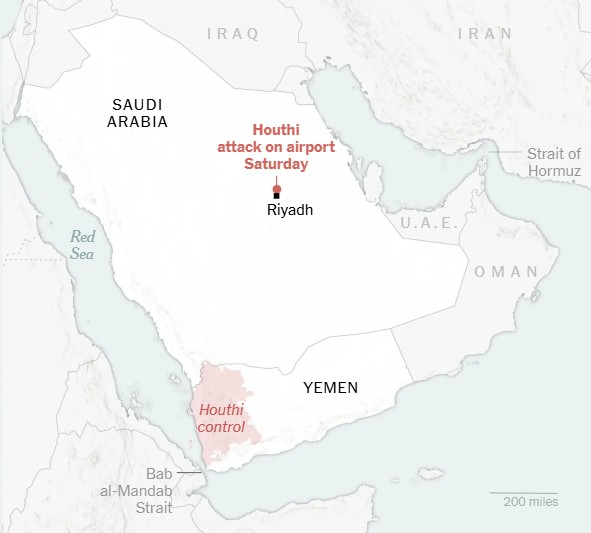
The Iran-backed Houthi militia launched a deadly attack on an international airport in Saudi Arabia’s capital on Saturday that Saudi officials said killed at least 12 people and injured more than 300 others.
The Iran-backed Houthi militia launched a deadly attack on an international airport in Saudi Arabia’s capital on Saturday that Saudi officials said killed at least 12 people and injured over 300 more, in a dramatic escalation of the war between the kingdom and the Houthis.
The strike, which a senior Houthi official said the militia was responsible for, was the deadliest attack in a Gulf Arab country since the U.S.-Israeli war with Iran began in February.
The latest toll was announced early Sunday morning by the Saudi civil aviation authority, which said four Saudi nationals and one U.S. citizen were among the 12 dead. It added that of the 309 people injured, some were in critical condition.
Secretary of State Marco Rubio later confirmed in a social media post that a U.S. citizen had been killed in the attack.
Source: Institute for the Study of War and Critical Threats Project at the American Enterprise Institute.
Earlier, the Saudi aviation agency announced the temporary suspension of operations at King Khalid International Airport in the capital, Riyadh. Repeated, deadly Houthi attacks on the airport this week have struck at the heart of Crown Prince Mohammed bin Salman’s ambitions to turn the city into a global travel and business hub, threatening to disrupt major international events planned for the coming weeks.
The Saudi-led military coalition fighting the Houthis in Yemen said in a statement on Sunday that the Houthi attack had targeted a passenger terminal at the airport, and vowed a decisive response.
Across the border in Yemen, Saudi warplanes have been waging a deadly bombing campaign against the Houthis, who say that the country has been subjected to hundreds of airstrikes in recent weeks. Since Sept. 3, airstrikes have killed 91 people in Yemen, mostly women and children, according to Anees al-Asbahi, a spokesman for the Houthi government-affiliated health ministry.
Mohammed al-Bukhaiti, a senior Houthi official, said the militia was responsible for the attack in Riyadh on Saturday, which he said was in retaliation for Saudi strikes, including on civilian infrastructure in Yemen.
Generated image depicting armed terrorists with assault rifles inside an airport terminal.
The Houthis carried out the attack “so that the world understands that airports, seaports, wedding and mourning halls, hospitals, and markets in Yemen are civilian facilities that must not be targeted or harmed — and that the same rules that apply to these facilities in Yemen must also apply to their counterparts everywhere else,” he said.
Saudi officials did not immediately respond to questions about details of the attack. A reporter for The New York Times, however, saw at least six ambulances heading toward the airport, where the police had blocked entry.
The U.S. Embassy in Riyadh, along with other Western embassies, urged its citizens to avoid the area and warned of travel disruptions.
Speaking at the White House, President Trump told reporters, “we just found out about the recent attack.” He said the United States would “make a decision” about possibly intervening in the conflict, without offering further detail. Mr. Trump carried out a bombing campaign against the Houthis last year, declaring a swift victory after the United States burned through weapons and munitions at a rate of about $1 billion in the first month alone.
The Houthis also carried out attacks earlier this week on airports in Riyadh and Abha, in the south of the kingdom, killing and injuring several people, according to the Saudi authorities.
Maj. Gen. Turki al-Maliki, a spokesman for the Saudi-led military coalition in Yemen, said early Sunday that “a projectile fell” in the area of King Fahd International Airport, in eastern Saudi Arabia, without elaborating.
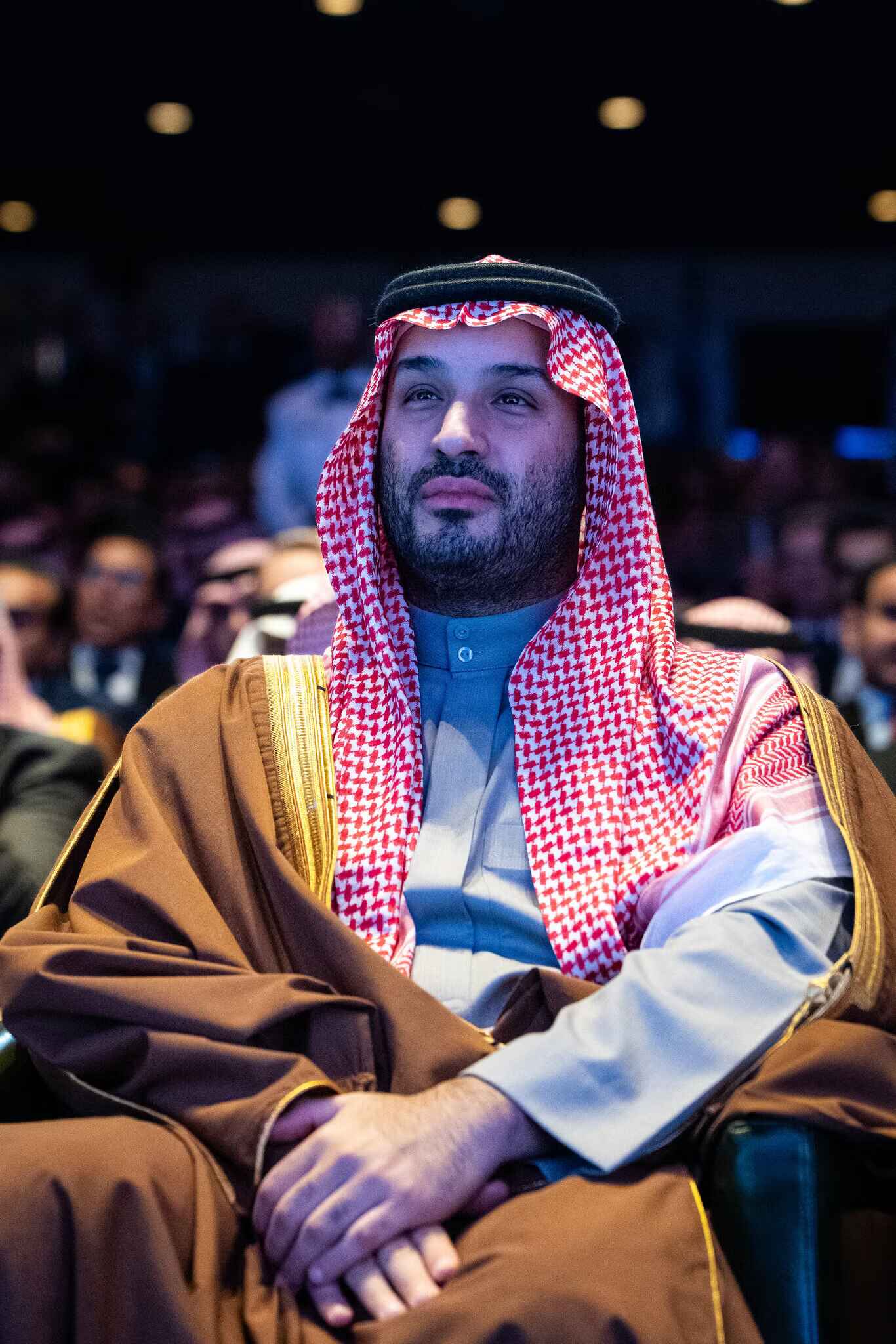
Crown Prince Mohammed bin Salman of Saudi Arabia at an investment conference in Washington, last year.
Saudi Arabia previously led a disastrous bombing campaign against the Houthis in 2015, after the militia took over Yemen’s capital of Sanaa, routing the Yemeni government. During the brutal war that ensued, hundreds of thousands of people died from violence, hunger and disease, but the Houthis survived, cementing their rule over northern Yemen.
A truce in 2022 brought a fragile peace to the country, until the United States and Israel attacked Iran in February, igniting a regional war.
Tensions between Saudi Arabia and the Houthis re-emerged in July, after the Houthis accused the kingdom of bombing the airport in Sanaa. The Saudi-backed Yemeni government claimed responsibility for that bombing, saying it was acting to prevent an unauthorized Iranian plane from landing.
The Houthis have long bristled at restrictions on their airspace that are enforced by Saudi Arabia, calling them a blockade. They soon announced that they intended to enforce a “blockade for blockade” policy and declared an embargo on Saudi shipping in the Red Sea — which has become an important alternative route for Saudi oil exports after the Iran war disrupted shipments through the Strait of Hormuz, a waterway near Iran.
Yemen’s internal war soon reignited, with fierce clashes between the Houthis and Saudi-backed forces allied with the Yemeni government.
The Houthis seized Yemen’s entire Red Sea coastline last month in a lightning offensive that gave the group greater control over the Bab al-Mandab Strait, an important choke point for global trade.
Generated image of an Islamic terrorist holding a knife to an innocent woman at the airport while they both scream.
Finally, a full-blown war broke out last weekend. The Saudi-backed Yemeni government announced a new military campaign against the Houthis, pledging to oust them from all of the territory they had seized over the past 12 years, and Saudi Arabia began a new bombing campaign against the militia.
That decision has plunged the kingdom deeper into the regional fallout of the U.S.-Israeli war on Iran, the Houthis’ main backer. Prince Mohammed now faces the difficult task of stopping the Houthi attacks while avoiding another prolonged war that could derail his economic plans.
Analysts say that a political solution to the conflict has become increasingly challenging to work out as the Houthis’ demands continue to grow. Houthi officials, battle-hardened by a decade of warfare and ruling a countryside with much of its infrastructure already destroyed by the fighting, appear to be calculating that they can inflict greater pain on Saudi Arabia than the kingdom can inflict on them.
Over the coming weeks, Riyadh was expected to host visitors from around the world for major global events, beginning on Sunday with the W.P.C. Energy Congress, an international gathering of energy officials and executives.
In an email to participants late on Friday, organizers of the event said it would proceed as planned and offered alternative travel options, including coordinated flights with Saudia, the national carrier. The airline’s flights were among those diverted on Saturday, according to flight-tracking data.
Later this month, Riyadh is also expected to host the Future Investment Initiative, Prince Mohammed’s annual investment summit, which typically draws world leaders, billionaires and top global executives. Organizers have yet to announce any changes to that event’s schedule.
It now sounds like Trump is going to get even more involved and may now start directly bombing Yemen very intensely as retaliation for their attack on his Muslim friends in The Kingdom®.